Where to Watch the Sunset on Maui: Boats, Beaches and Haleakala
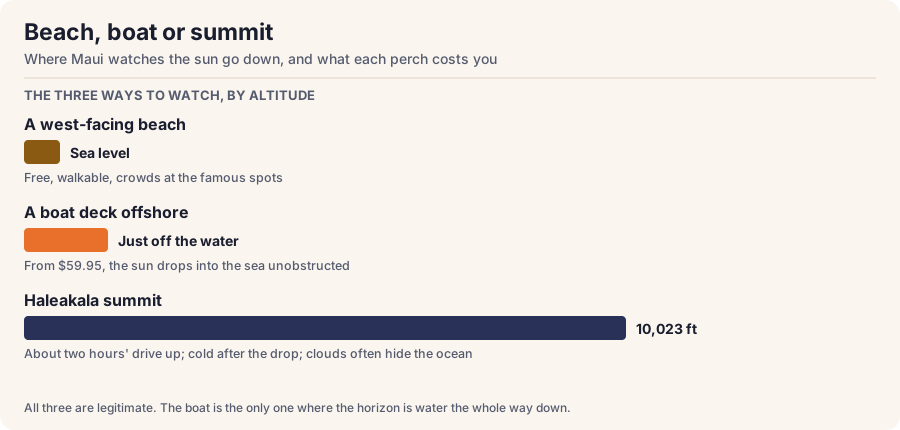
Three vantage points get argued about on this island: the sand at Black Rock, a deck two miles offshore, and a crater rim at ten thousand feet. Only two of them reliably face the ocean horizon.
Short answer
For the ocean horizon itself, the west-facing beaches and a boat in the Auau Channel are the two honest answers. A boat adds deck height, a sightline with nobody in front of it and drinks handled, from $59.95. Haleakala's summit is a sunrise destination first, and at sunset a cloud deck often sits between the rim and the sea.
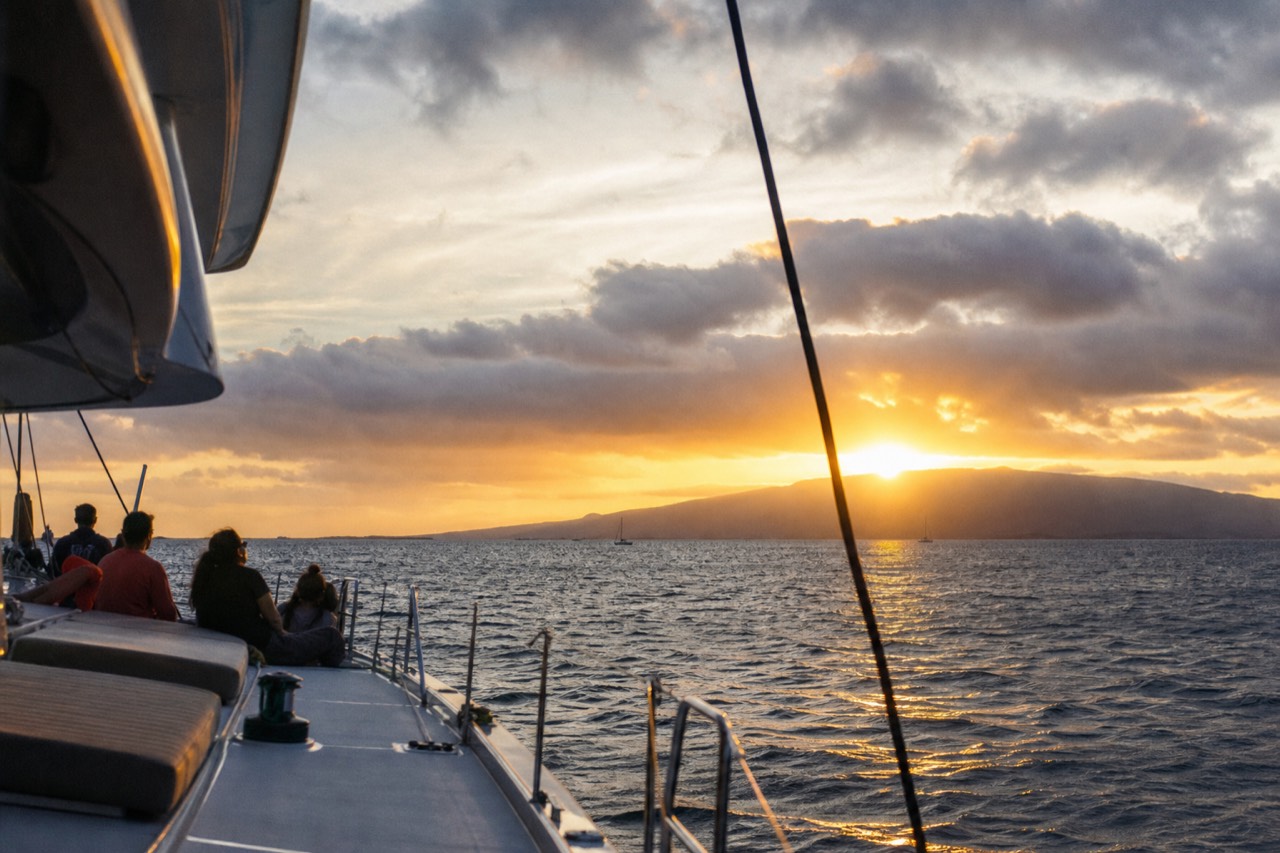
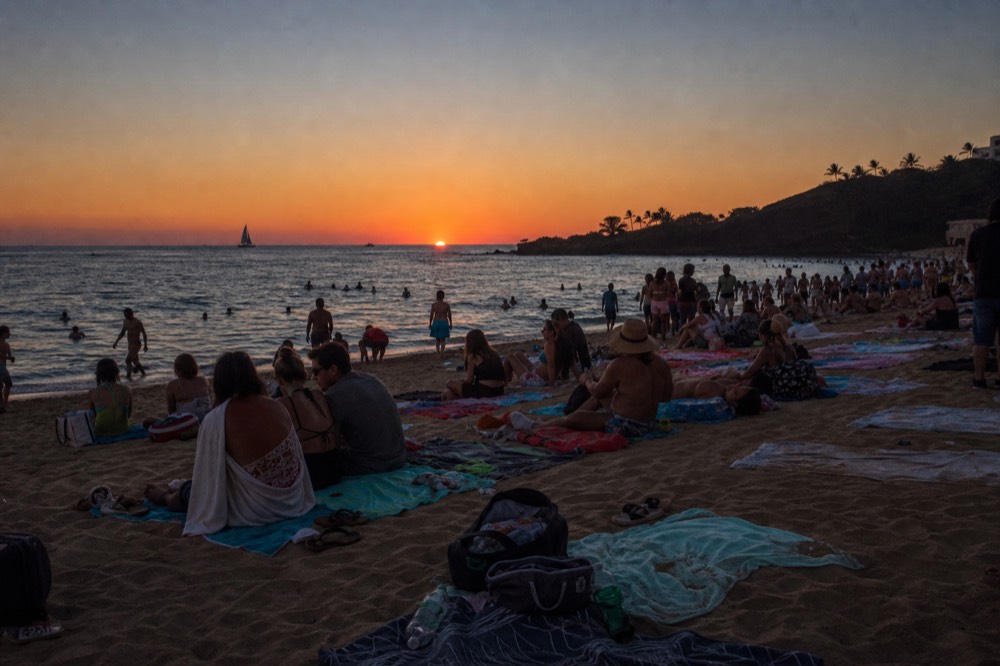
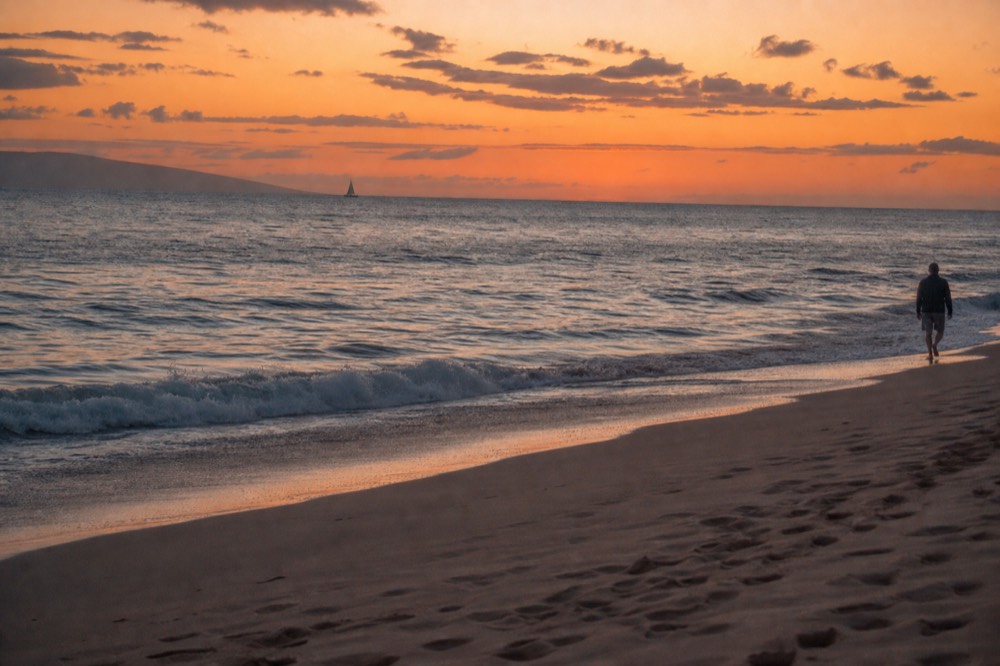
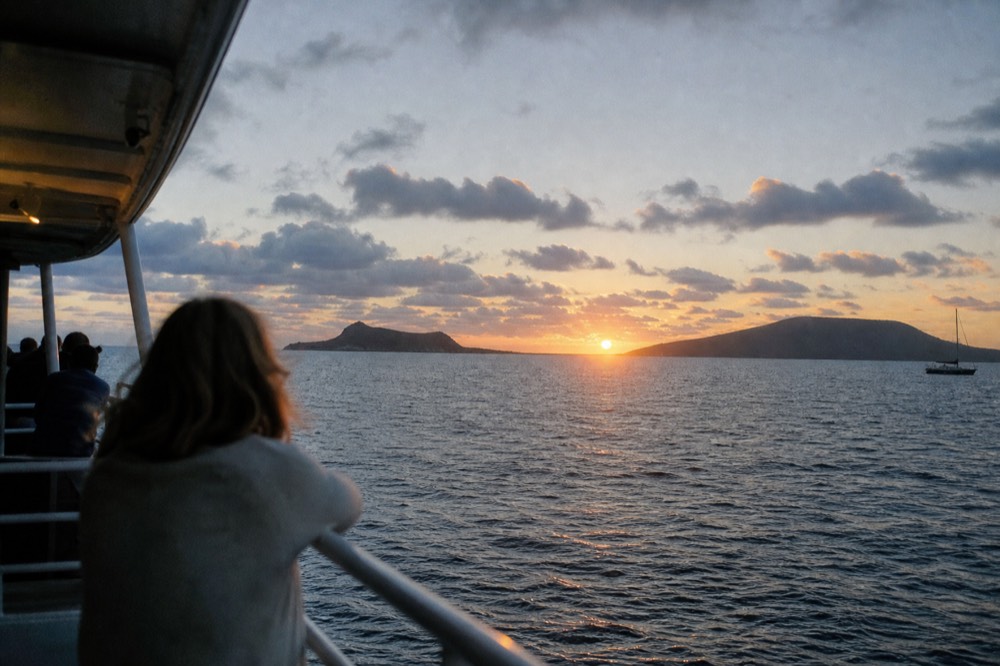
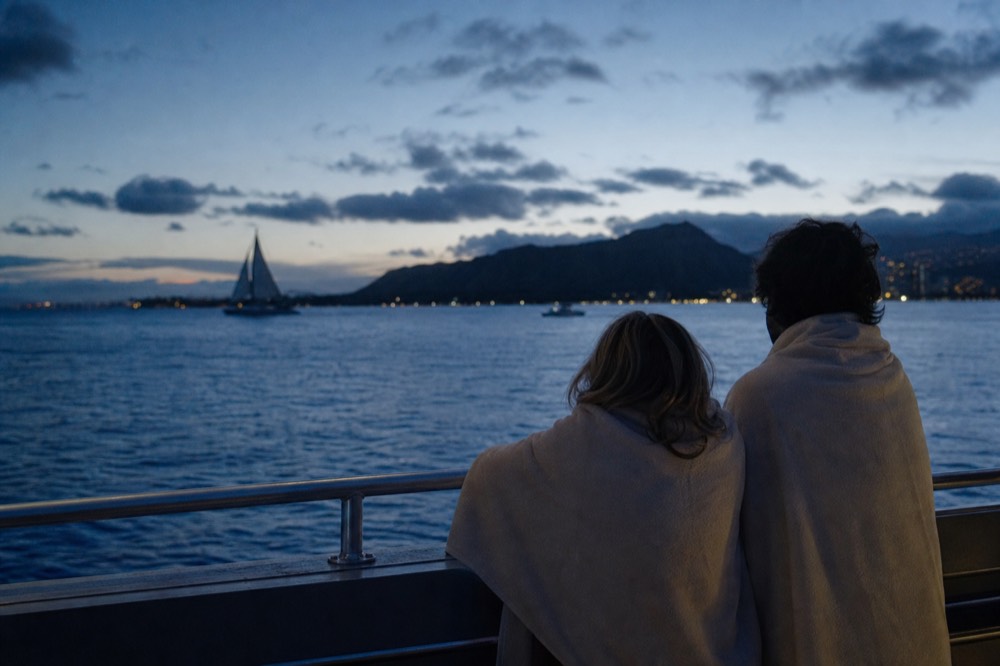
By six on a November evening the sand at Black Rock is full. Towels overlap, phones are up, and somebody's cooler has become a bench. Two miles offshore on that same evening a catamaran is pointing west into open water with nothing between the rail and the horizon except the long grey back of Lanai, and the people on it paid between $59.95 and $290 to stand where nobody is standing in front of them.
That is the whole argument in one picture. Maui gives away one of the better sunset horizons in the Pacific for free, and then sells a version of it with elevation, distance and a drink in your hand. Both are legitimate. Which one is right depends on the month, the shore you are staying on, how much you mind crowds, and whether you want the sun to be the event or the backdrop.
Where is the best place to see the sunset on Maui?
For an unobstructed ocean horizon, the west-facing beaches from Kapalua down to Kaanapali and a boat out in the Auau Channel are the two honest answers. The beaches cost nothing and fill up early. A boat starts at $59.95, adds deck height and a clear sightline, and carries you away from the shoreline entirely.
The reason those two win is geography rather than opinion. Maui's west shore looks straight out at the channel, and the channel is bounded by Lanai and Molokai low enough on the horizon that the sun either drops behind an island silhouette or into open water depending on the season. Nothing tall stands between the viewer and the sun. On the south shore at Kihei and Wailea the same thing is true across Maalaea Bay, with Kahoolawe and Molokini adding shapes to the middle distance.
Everywhere else on the island has a problem. The east side faces the wrong way. The upcountry slopes look across the isthmus into the back of the West Maui Mountains, which eats the last fifteen minutes of the sun on many evenings. Hana is on the far side of the island from the event. And the summit of Haleakala, the one place everyone asks about, has its own set of complications covered further down.
| Vantage point | Cost | Effort | Crowd by 30 min before | Wind exposure | What you actually see |
|---|---|---|---|---|---|
| Kaanapali sand, Black Rock end | Free, paid parking | Low | Heavy, shoulder to shoulder | Light, sheltered by the point | Ocean horizon with Lanai on it, people in the foreground |
| North Kaanapali and Kahekili | Free, small lot | Low | Moderate | Light to moderate | Same horizon, far fewer bodies |
| Kihei and Wailea sand | Free, roadside lots | Low | Moderate to heavy | Moderate, afternoon breeze | Wide bay, Kahoolawe and Molokini shapes |
| Boat, Auau Channel | $59.95 to $290 | Low, but ticketed and timed | None, capped by vessel size | Moderate underway, cooler than shore | Full horizon, deck height, island silhouettes, no foreground |
| Boat from Maalaea | $59.95 to $290 | Low, drive to the harbor | None | Highest, trades funnel the isthmus | Bay-wide view, usually calms toward the drop |
| Haleakala summit | Park entry, two hours each way | High | Light compared with sunrise | Severe, and cold | Cloud deck below you as often as an ocean horizon |
| Resort lawn or luau seat | Included or ticketed | None | Contained, seated | Light | Framed view, usually over a lawn and a wall |
| Highway pullouts at Olowalu | Free | Low | Light | Moderate | Low, wide horizon with Lanai centred |
Read that grid and one row does something the others cannot. Every land-based option has something in the foreground: people, a seawall, a lawn, a road. The boat rows are the only ones where the bottom third of the view is water.
What does a boat show you that the sand does not?
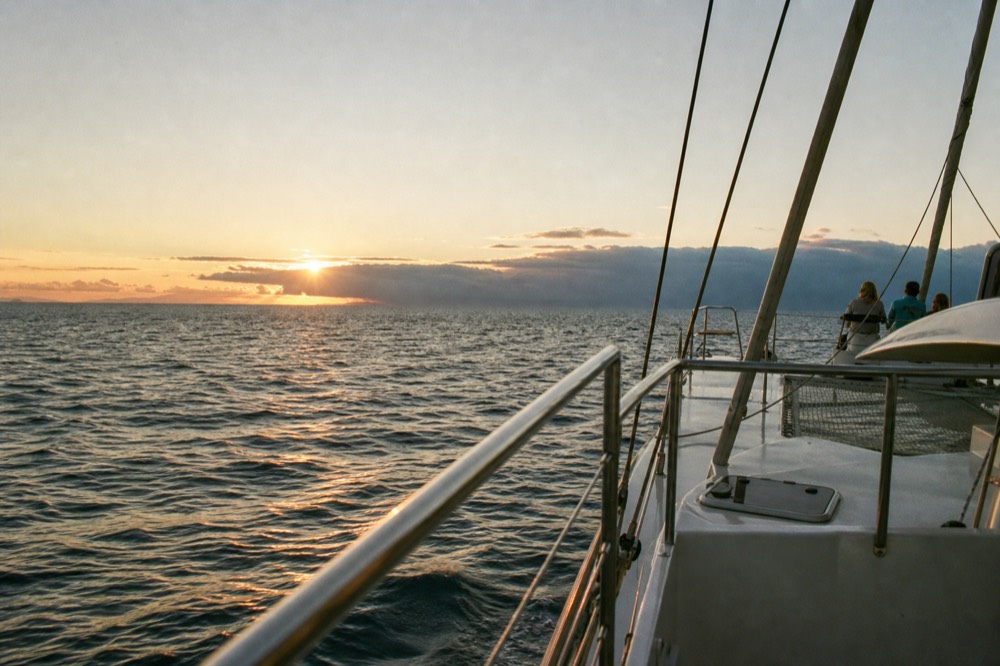
Three things. Deck height, which lifts the horizon and removes the surf line. Distance offshore, which removes everyone else's silhouette from the frame. And time on the water afterwards, because the twenty minutes of afterglow that empties a beach is when a boat is still out there with the sky doing its second act.
Height sounds trivial until you compare the two positions. Sitting on sand puts your eye about three feet above sea level, with breaking surf and a hundred standing people between you and the water. A catamaran deck sits several feet higher, and the vessel has already moved a mile or two from the shoreline, so the foreground is empty ocean. It is the difference between watching through a crowd and watching from a box seat.
The second difference is what happens after the sun goes. Beaches empty within about five minutes of the disc disappearing, which is a mistake, because the strongest colour on a trade-wind evening arrives roughly ten to twenty minutes later when the light bounces off the underside of the cloud. Boats are still out. A two-hour sailing timed around sunset has that whole window built into it.
Price is the third factor and it is less brutal than people expect. Across the twenty boats running sunset departures on this island the starting fares run from $59.95 to $290, the median is $145, and exactly half the fleet starts at $140 or under. The cheapest true sail is the 4.9-rated two-hour run from Maalaea slip 72 at $71, which is less than most people spend on dinner in Wailea. You can check which evenings are still open on the Maalaea sail before deciding the boat option is a splurge.
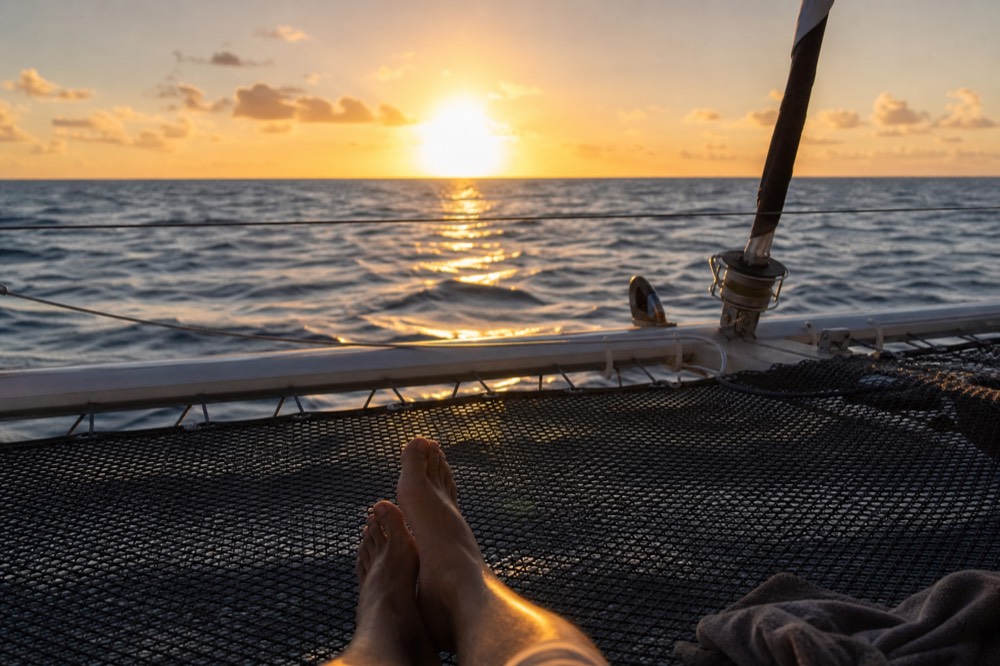
One traveller who sailed out of Maalaea in August 2026 put the value question plainly. "Sail Maui provides an exceptional sunset experience. The crew was friendly & very accommodating," wrote Euan. What the review does not say, and what matters for this comparison, is that the same two hours on a beach would have cost nothing and delivered a narrower view.
Which Maui beaches actually face the sunset?
The west-facing strand from Kapalua south through Napili, Kahekili and Kaanapali, then the Olowalu and Launiupoko roadside stretches, then the whole Kihei to Makena run on the south shore. Kaanapali's Black Rock end is the most crowded and the most photographed. Kahekili, a mile north, has the same horizon and a fraction of the people.
Beach choice on Maui is really a choice about foreground and crowd, because the horizon barely changes across fifteen miles of coast. What changes is what is in the bottom of your photo and how many strangers are in it.
| Beach | Shore | On the horizon | Crowd 30 min before | Parking | The catch |
|---|---|---|---|---|---|
| Kapalua Bay | West | Molokai to the north, open channel west | Light to moderate | Small lot, fills early | Bay is angled, headland clips the last minutes in summer |
| Napili Bay | West | Molokai and open water | Moderate | Very limited, residential | Almost no public parking, walk in |
| Kahekili Beach Park | West | Lanai and open channel | Light to moderate | Dedicated lot, restrooms | Least known of the good ones, which is the point |
| Kaanapali, Black Rock end | West | Lanai squarely on the horizon | Heavy | Paid resort structures | The nightly torch and cliff dive off the rock pulls a crowd |
| Kaanapali, south end | West | Lanai and open water | Moderate | Paid, walk from the boardwalk | Same view, ten minutes' walk from the scrum |
| Launiupoko | West | Lanai centred, low and wide | Light | Free lot | Shallow reef, better for the view than the swim |
| Olowalu pullouts | West | Lanai dead ahead | Light | Roadside gravel | Highway noise behind you |
| Kamaole I, II and III | South | Kahoolawe, Lanai, West Maui flank | Moderate to heavy | Free lots, competitive | Sun angle swings a long way here across the year |
| Keawakapu | South | Wide bay, Molokini shape | Moderate | Two small lots | Locals' choice, arrive well before |
| Wailea and Polo | South | Kahoolawe and open bay | Moderate | Public access lots | Resort frontage, walk the coastal path |
| Makena Big Beach | South | Kahoolawe and Molokini | Moderate | Park lot, gates close | Gate closing time can beat the afterglow |
The Black Rock question comes up constantly, so here it is straight. The lava point at the north end of Kaanapali is a genuinely good spot, the nightly torch-lighting and cliff dive is a real ceremony rather than a tourist invention, and the trade-off is that several hundred people know it. If your priority is the ceremony, go. If your priority is the sun, walk north to Kahekili or book a deck.
For anyone staying on the west side and weighing sand against a ticket, the boats that load off Kaanapali Beach leave from the same stretch of sand you would otherwise be sitting on, which makes the comparison unusually direct: you either stand on that beach or you wade off it.
Is sunset at the Haleakala summit worth the drive?
Sometimes, and it is a different product from what most people imagine. Sunrise is the famous one and it runs on advance timed reservations. Sunset needs no reservation, draws a far smaller crowd, and puts you near ten thousand feet in air that can run thirty degrees Fahrenheit colder than the beach you left.
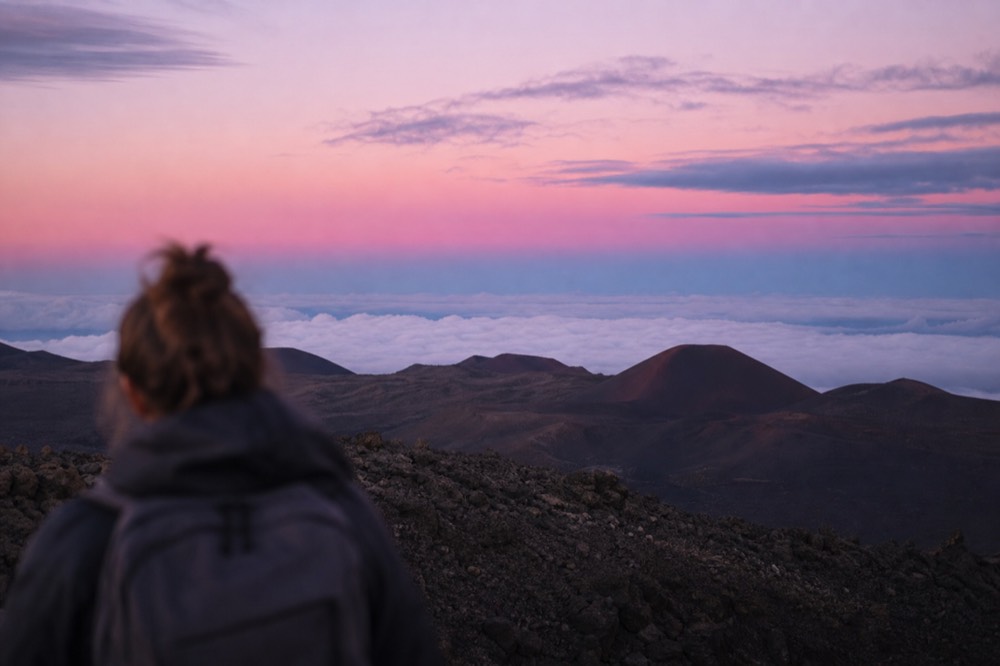
The honest problem with sunset up there is meteorological. Hawaii's trade wind inversion usually parks a cloud deck somewhere between six and seven thousand feet, which is below the summit. On a good evening that gives you the postcard: an ocean of white cloud with the sun sinking into it and cinder cones going pink. On a bad one it gives you the same white deck sitting exactly where the ocean horizon should be, so the sun disappears into cotton wool twenty minutes early. You do not know which one you are getting until you are up there.
That is a real cost, because getting up there is not casual. The road climbs from sea level to the summit in a couple of hours from the west-side resorts, most of it in switchbacks, and the descent afterwards happens in the dark with a queue of cars riding their brakes. Budget four to five hours door to door and accept that the last third of it is a mountain road at night.
| Question | Sunrise at the summit | Sunset at the summit |
|---|---|---|
| Reservation required | Yes, timed entry booked in advance | No |
| Crowd | Heavy, the lot fills | Much lighter |
| Drive timing | Leave the coast around 3am | Leave mid-afternoon |
| Temperature | Coldest hour of the day | Cold and dropping fast |
| Wind | Frequently severe | Frequently severe |
| Cloud risk | Deck below you is the attraction | Deck below you can block the horizon |
| Descent | In daylight | In the dark, brakes and cyclists |
| Ocean horizon visible | Not the point, you face east | Often obscured by the inversion layer |
The summit is worth doing once for what it is: a genuinely strange volcanic landscape at altitude, above the weather. It is not a substitute for an ocean sunset, and treating it as one is how people end up disappointed on a cold rim at seven thousand feet of cloud. The tradeoffs get worked through in more detail in the piece on whether sunset at Haleakala is worth the drive.
Boat or beach: which fits the evening you want?
Beach if the sunset is one part of a longer day, if the group is loose, if you want to leave when you feel like it, and if free matters. Boat if the sunset is the actual plan, if the party is two people or a celebration, if you want the afterglow as well as the drop, or if you want somebody else handling drinks.
The mistake is treating this as a value question. It is a scheduling question. A beach sunset is elastic: turn up when you turn up, leave when you like, nothing is booked. A boat sunset is rigid: a departure time, a check-in window thirty to forty-five minutes earlier, and a fixed return. What you buy with that rigidity is a guaranteed position and a two-hour block where nothing else can intrude.
| If this is true | Beach | Boat | Why |
|---|---|---|---|
| Travelling with a toddler | Yes | Only the big stable decks | Sand allows escape, a boat does not |
| It is an anniversary | No | Yes | The occasion needs a frame around it |
| The budget is zero | Yes | No | Sand is free, the cheapest seat is $59.95 |
| You want photographs without strangers | No | Yes | Foreground is the whole issue |
| Whale season, December to April | Partly | Yes | Height and distance change the odds entirely |
| You are seasick-prone | Yes | The Auau Channel is the calm option | Four islands shelter that water |
| Flexible arrival, no plan | Yes | No | Boats leave on time and do not wait |
| You want a drink poured for you | No | Yes | Five boats in the fleet run open bars |
| Last night of the trip | Either | Yes | The afterglow window is the closer |
What time does the sun actually drop?
Between 5:44pm in late November and 7:12pm in early July, a swing of about ninety minutes. Hawaii keeps no daylight saving, so the clock never jumps. On the 15th of each month the sun sets at 6:07pm in January, 6:46pm in April, 7:09pm in June, 6:29pm in September and 5:46pm in November.
That ninety-minute range decides more than people expect. A November sunset at 5:44pm means dinner happens afterwards and the whole thing is over before most restaurants get busy. A July sunset at 7:12pm means the light is still good at seven, which pushes dinner to nine and turns the evening into a late one.
| Month (15th) | Sunset | Last usable light | What the vantage question becomes |
|---|---|---|---|
| January | 6:07 pm | ~6:35 pm | Whale season is on, height matters, boat wins |
| February | 6:25 pm | ~6:53 pm | Peak whales, peak visitors, beaches busy early |
| March | 6:36 pm | ~7:04 pm | Whales tapering, clear evenings common |
| April | 6:46 pm | ~7:14 pm | Shoulder month, thin crowds, good odds |
| May | 6:57 pm | ~7:25 pm | Sun swinging north, Lanai gap opening up |
| June | 7:09 pm | ~7:37 pm | Latest light of the year, dinner runs late |
| July | 7:11 pm | ~7:39 pm | Trades strongest, Maalaea windiest |
| August | 6:56 pm | ~7:24 pm | Warmest water, softest evenings |
| September | 6:29 pm | ~6:57 pm | Best month to have the beach half to yourself |
| October | 6:02 pm | ~6:30 pm | Sunset lands before dinner again |
| November | 5:46 pm | ~6:14 pm | Earliest sunsets of the year, whales returning |
| December | 5:48 pm | ~6:16 pm | Cold-ish evenings, earliest boarding times |
Those figures come from the US Naval Observatory sun data tables for the Lahaina coordinates, and the full breakdown with boarding windows and golden-hour timings sits in the month-by-month sunset table. The practical version is simple: work backwards from the drop, allow forty-five minutes of good light before it and half an hour of colour after it.
Where along the horizon does the sun set through the year?
It swings roughly fifty degrees. From Kaanapali the winter sun drops behind Lanai's ridgeline, and by midsummer it has moved north to set in the open channel between Lanai and Molokai. From Kihei and Wailea the same swing runs from Kahoolawe in December to the Lanai gap in June.
This is the single most useful thing to know when picking a spot, and almost nobody mentions it. The sun does not set in the same place twice across a year. At this latitude it tracks about twenty-four degrees either side of due west, which means the shape it sinks behind changes completely between January and July.
From the west shore, the winter version is the more dramatic one. December through February the disc goes down onto Lanai, so the last few minutes are a hard black ridgeline with the sun sitting on it, and the light comes back up off the water. By June the sun has moved north past the island entirely and drops into open water in the gap toward Molokai, which is a cleaner horizon and a longer, flatter finish. Both are good. They are not the same photograph.
The south shore inverts the calendar. Standing on Kamaole or Keawakapu in December, the sun goes down toward Kahoolawe across the bay. By June it has swung so far north that it sets over the shoulder of the West Maui Mountains from some parts of Kihei, which is the one case on this island where a summer sunset is worse than a winter one from the same patch of sand. Anyone booked into Wailea in July should either walk south toward Makena or take the view offshore, which is what a boat out of Maalaea does automatically.
Out on the water none of this is a problem, because the boat moves. Crews on the Kaanapali sailings routinely reposition so the sun sits where guests can see it, which is a small operational detail with an outsized effect. The most-reviewed cocktail sail on the island has current departure dates listed, and its 1,533 reviews at 4.8 make it the largest single body of feedback anywhere in the fleet.
How often do clouds spoil it?
Less often than on most tropical coasts, because the west and south shores sit in the rain shadow of the mountains. The typical failure is not overcast, it is a low bank of trade-wind cloud parked on the horizon that swallows the last five minutes. The colour afterwards is usually better on those evenings, not worse.
Trade winds come out of the northeast at ten to twenty knots or more, dump their moisture on the windward side, and arrive over Lahaina and Kihei dry. That is why the resorts are where they are. The leeward coast gets a large share of clear evenings, and the wet months of November through March still deliver plenty of them.
What does happen, frequently, is a horizon band. Cloud stacks up along the line where the sea meets the sky, and the sun goes into it a few minutes early. People on the beach groan and start packing. That is precisely the wrong reaction, because a horizon band is what produces the strong underlit colour ten to twenty minutes later. Boats stay out for it. Beaches empty before it.
| Condition | How it shows up | Effect on the drop | Effect on the afterglow |
|---|---|---|---|
| Clear horizon | Nothing on the skyline | Clean disc, green-flash chance | Modest, short |
| Low horizon band | Grey stripe at the waterline | Sun vanishes 3 to 8 minutes early | Strong, the best colour of all |
| High cirrus | Wispy streaks overhead | No effect on the disc | Excellent, colour spreads wide |
| Vog from the Big Island | Milky haze, softened sun | Redder, softer, larger disc | Warm but muted |
| Full overcast | Flat grey ceiling | No visible sun | Little, but boats still sail |
| Trade squall | Passing shower cell | Brief, moves through | Rainbow odds go up sharply |
| Kona wind, winter | Wind from the south, humid | Hazier, hotter light | Variable |
Wind is the other variable and it is more predictable than cloud. Maalaea sits on the isthmus where the trades funnel between the two mountain masses, which makes it one of the breeziest harbors in the state through the afternoon. It usually eases toward sunset, which is exactly when the boats are out there. Conditions on any given evening are published in the NWS Hawaii coastal waters forecast, and the harbor's own character is covered across the Maalaea harbor fleet.
What about resort lawns, luaus and paid seats?
They sell you a chair, not a horizon. A luau seat and an oceanfront restaurant table both put a lawn, a wall or a stage between you and the water, and the show usually starts before the sun goes down. They are good evenings. They are not sunset-viewing products, and their prices sit above most of the boat fleet.
The resort lawn version is the most common accidental choice: guests wander out of the room at ten to six, find a chair on the property, and watch from there. It works. The view is framed by landscaping and a seawall, the light is real, and the walk back to the room is thirty seconds. Nobody should feel short-changed by it.
A luau is a different transaction. It is dinner and a performance with a sunset happening somewhere off to the side, usually behind the audience's line of sight once the show begins. Per head it typically costs more than a plated dinner sail, and the sun is a scheduling constraint rather than the point. If the sunset is what the evening is for, that is money aimed slightly off target.
| Paid option | Typical position of the sun | What you are buying | Fleet comparison |
|---|---|---|---|
| Luau seat | Off to one side, before the show | Food, performance, seating | Above the $290 top of the boat fleet in many cases |
| Oceanfront restaurant table | Framed by a window or a wall | Dinner with a view attached | Comparable to a $140 to $180 dinner sail |
| Resort lawn chair | Landscaping in the foreground | Convenience, nothing else | Free if you are staying there |
| Cocktail sail seat | Dead ahead, no foreground | Two hours, open bar, position | $59.95 to $137 |
| Plated dinner sail seat | Dead ahead, through dinner | Dinner plus the position | $140 to $290 |
| Private powerboat | Wherever the captain puts it | Six guests, total control | $251 per seat, around $1,500 books the boat |
For a Lahaina-based evening the harbor has been coming back in phases since limited commercial operations resumed there in December 2025, and the sailings that still leave from it are worth checking against the west-side beach plan. You can see the current fare on the 'Alihilani sail out of Lahaina, a 2.5-hour performance catamaran at 4.8 across 367 reviews with drinks and appetizers included, or read the harbor's status across sailings out of Lahaina Harbor.
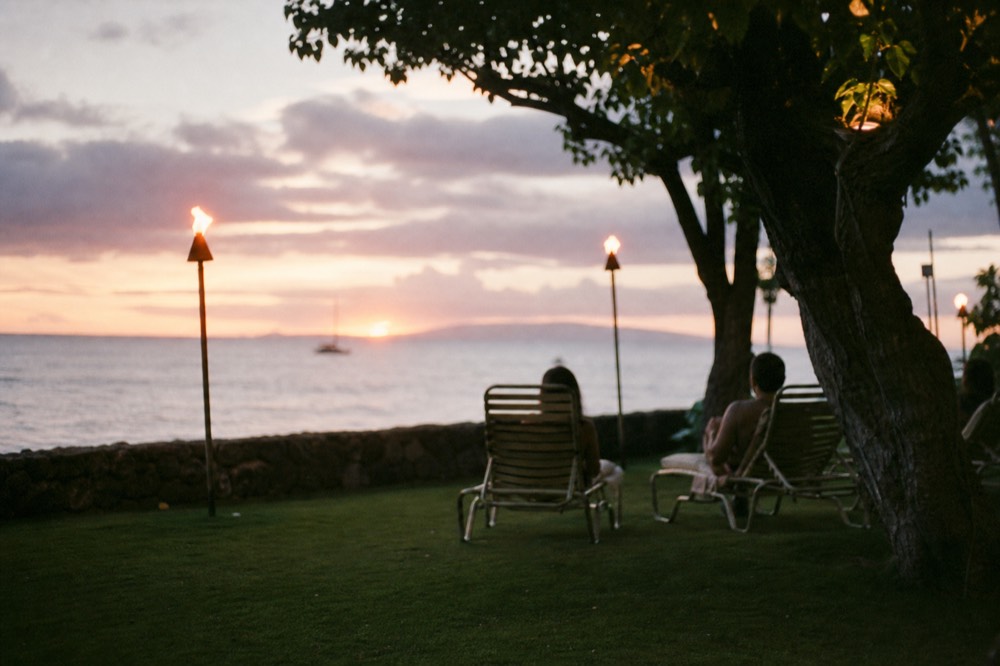
There is one more category worth naming: the free viewpoint nobody queues for. The highway pullouts between Olowalu and Ukumehame put Lanai dead ahead across a low, wide horizon, with almost nobody there. Traffic noise behind you is the price. For a fifteen-minute stop on the drive back from somewhere else, it beats fighting for parking at Black Rock. The same stretch of water is what open-bar cocktail sails are crossing while you stand there.
Common questions about sunset viewing on Maui
Short versions of the answers people ask for most: the prettiest beach depends on which shore you are on, the summit is a sunrise attraction, September and April are the thinnest crowds, and the best free spot on the island is a mile north of the most famous one.
On that summit point: doing the mountain properly means the 3am sunrise window, and the tour operators carry the summit reservation for you; check dates on the sunrise tour with hotel pickup if the logistics are what has been stopping you. It pairs naturally with a boat that same evening: sunrise above the clouds, sunset on the water.
What beach has the prettiest sunsets on Maui?
On the west side, Kahekili Beach Park has the same horizon as Black Rock with a fraction of the crowd, and Kapalua Bay wins on setting if you get there early enough to park. On the south shore, Keawakapu and Polo hold up best. The full shore-by-shore ranking sits in the piece on which Maui beach has the prettiest sunsets.
Do you need a reservation for sunset at Haleakala?
No. The advance timed-entry reservation applies to sunrise. Sunset entry does not require one, which is part of why the evening crowd is so much lighter. Park entry fees still apply, and the descent afterwards happens fully in the dark.
Is the sunset better from a boat or from the beach?
From a boat, if the sunset itself is the reason you are out. Deck height, distance offshore and an empty foreground are things no beach can offer at any price. The beach wins on flexibility, cost and the ability to leave whenever you like.
Which month has the best sunsets on Maui?
April, September and October give the cleanest combination: settled air, thinner crowds and a sunset landing early enough that dinner still happens afterwards. Winter evenings deliver the strongest colour when a horizon band is present, and they come with humpbacks in the same frame from December to April.
How early should you get to a beach for sunset?
Thirty to forty-five minutes ahead at the popular spots, which is also roughly when the boats are boarding. Parking is the constraint rather than sand. At Black Rock in high season, an hour is not excessive. Kahekili and the Olowalu pullouts stay workable much later.
Can you see whales from shore at sunset?
Yes, from December through April, and the shore does surprisingly well because whales come close in Maalaea Bay and along the west coast. What a boat adds is elevation and distance from the surf line, plus the federal rule that keeps every vessel 100 yards from a humpback applies to the boat, not to your eyes. NOAA's sanctuary boating page sets out the approach rules that every operator works under.
What should you take to watch the sunset from a deck?
A layer, before anything else. Apparent temperature on a moving boat drops noticeably once the sun is gone, and that surprises people who were warm on the sand an hour earlier. The rest of it, footwear included, is covered in what to pack for the deck after dark, and the full fleet comparison lays the twenty boats side by side by harbor, price and rating.