What Makes a Sunset Cruise on Maui Special?
Maui's leeward coast faces west across a channel sheltered by four islands, so the sun drops behind Lanai over calm water. The geography, the season, the boats.
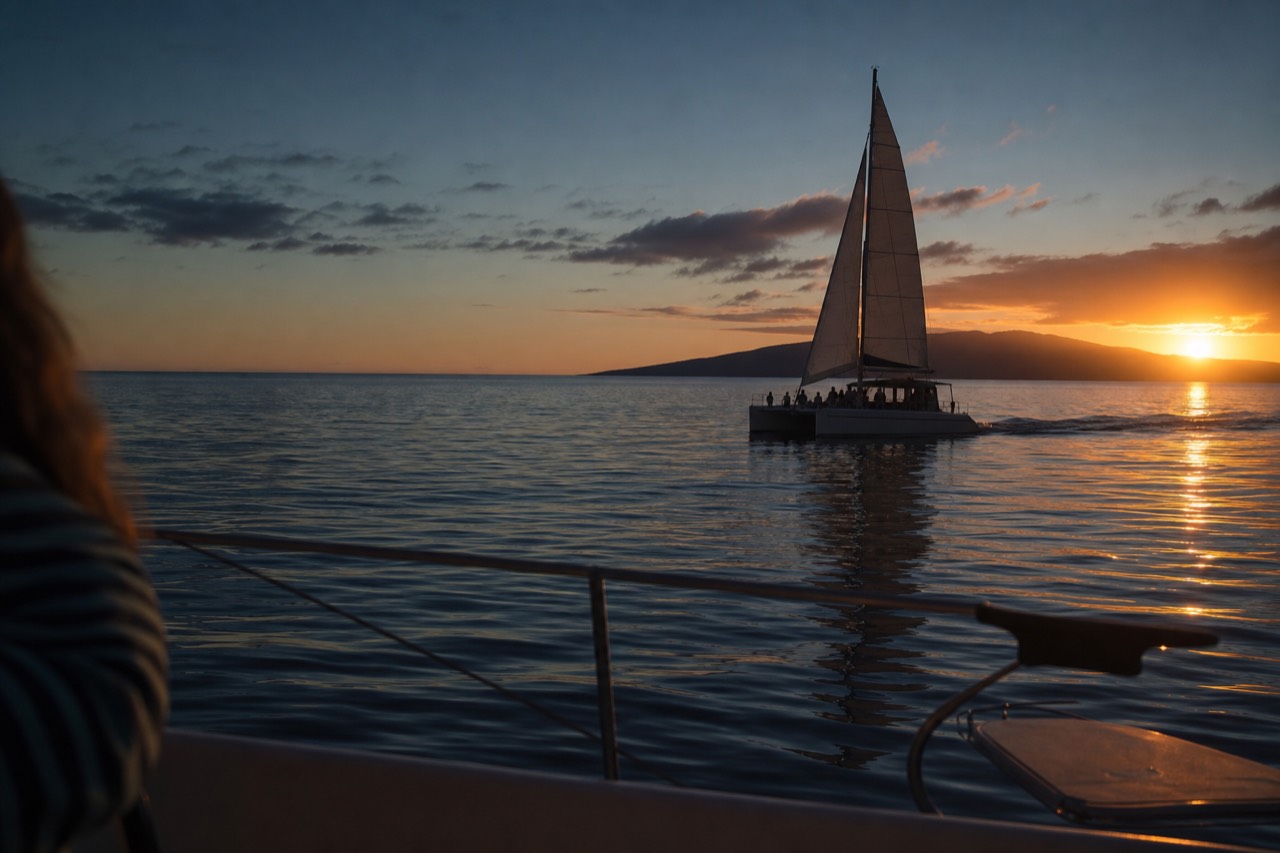
By six o'clock the trade wind that has been raking Maalaea Harbor all afternoon usually starts to give up. The chop flattens, the boats stop tugging at their lines, and the channel between Maui and Lanai turns into something closer to a lake with mountains around the edge. That timing is not luck. It is the daily pattern on this coast, and the whole evening fleet is built around it.
What makes an evening on the water here different from anywhere else?
Direction and shelter. Maui's leeward coast faces west across the Auau Channel, so the sun sets over open water with Lanai and Molokai standing on the horizon rather than empty sea. Four islands break the ocean swell before it arrives. The West Maui Mountains sit behind you, catching the afterglow long after the sun has gone.
Most sunset cruises anywhere in the world give you a flat horizon. Maui gives you a composed one. The sun drops behind land, which means silhouette, layered ridgelines and the sort of light separation that makes the difference between a nice sky and a photograph you keep.
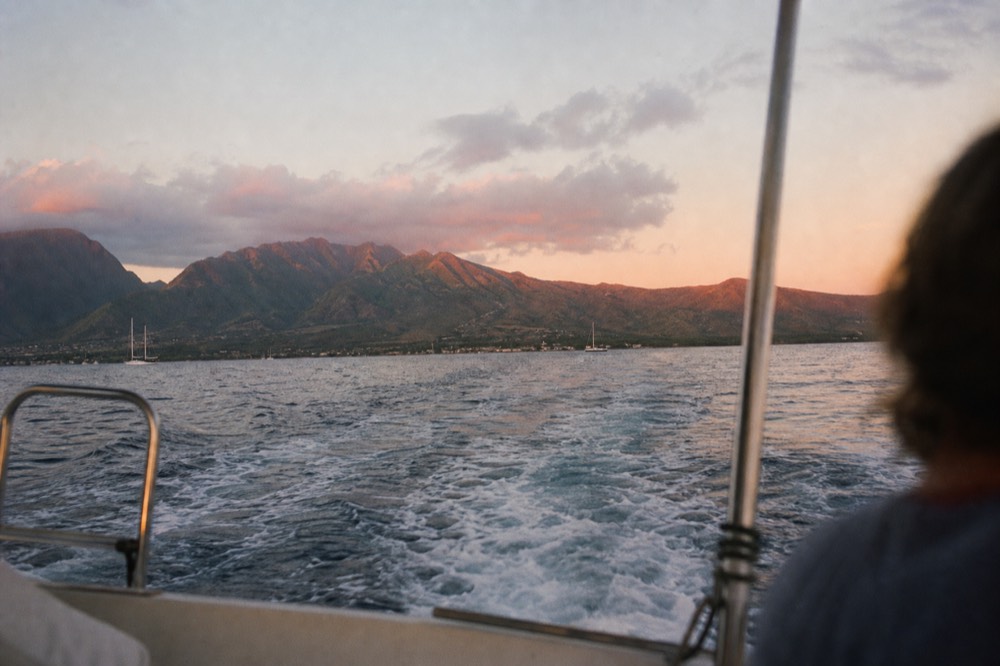
Then there is the second show. Once the sun is down, the light turns back east onto the West Maui Mountains, and the ridges above Kaanapali go pink and then a deep violet. Boats headed for the beach are pointed straight at it. People who watch only the west miss half of what they paid for.
Why is the water usually calm at that hour?
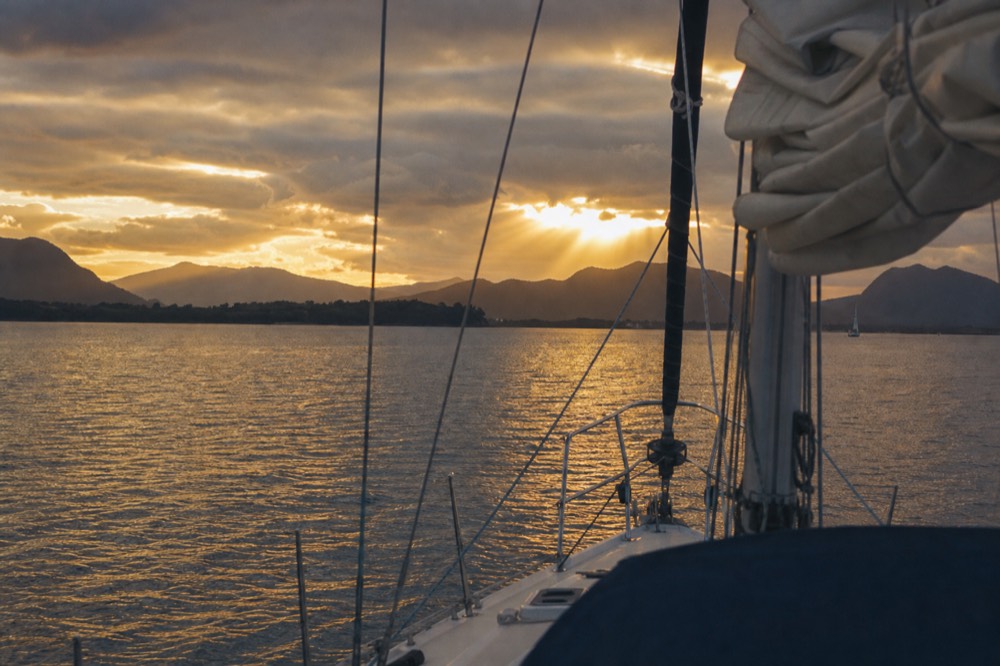
The four-island shelter. Lanai, Molokai and Kahoolawe sit between Maui's leeward coast and the open Pacific, so the Auau Channel is reliably the calmest cruising water in the state. Northeast trade winds of 10 to 20 knots blow over the top of the island, and the afternoon funnel through the Maalaea isthmus usually eases toward sunset.
That matters more than it sounds. Sunset boats are small, the deck is where you want to be standing, and dinner is being served. On an exposed coast, a two-hour evening trip is a negotiation with the swell. Here it usually is not, which is why the fleet leans so heavily toward sailing catamarans with open trampolines rather than enclosed vessels.
Maalaea is the exception worth knowing about. It is one of the windiest harbors in Hawaii because the trades compress across the low waist of the island, and reviewers of the Maalaea dinner boats mention holding onto hats and belongings. The wind typically drops as the sun does. If you are choosing between harbors, the boats leaving Maalaea sit closest to Molokini and Kahoolawe, while the Kaanapali sailings launch straight off the sand.
What do you see from a boat that you miss from the beach?
Eye-level light and a full 360 degrees of it. From the sand, you get the west and a crowd behind you. From the water, the sun tracks down behind Lanai to the west, Molokai's ridge sits northwest, the West Maui Mountains glow to the east, and on a Maalaea departure Kahoolawe and Molokini's crater rim sit off to the south.
| Look this way | What is out there | When it is at its best |
|---|---|---|
| West | The Auau Channel and the low profile of Lanai, where the sun drops | Winter evenings |
| Northwest | Molokai's ridge and the open gap the midsummer sun sets into | June and July |
| East, behind you | The West Maui Mountains, holding pink and violet after sunset | Every clear evening |
| South from Maalaea | Kahoolawe low on the horizon, with Molokini's crater rim between | Year round |
The seasonal shift in that first row is the detail most visitors never notice. From Kaanapali, winter sunsets drop behind Lanai's bulk, so you get a hard silhouette and a bright rim. In midsummer the sun sets further north, into the open channel between Lanai and Molokai, and the whole character of the light changes. Two sailings six months apart are genuinely different trips. Anyone weighing the shoreline option first should read our rundown of the best places to watch sunset from land, which is honest about where a boat adds nothing.
Does the season change what you get?
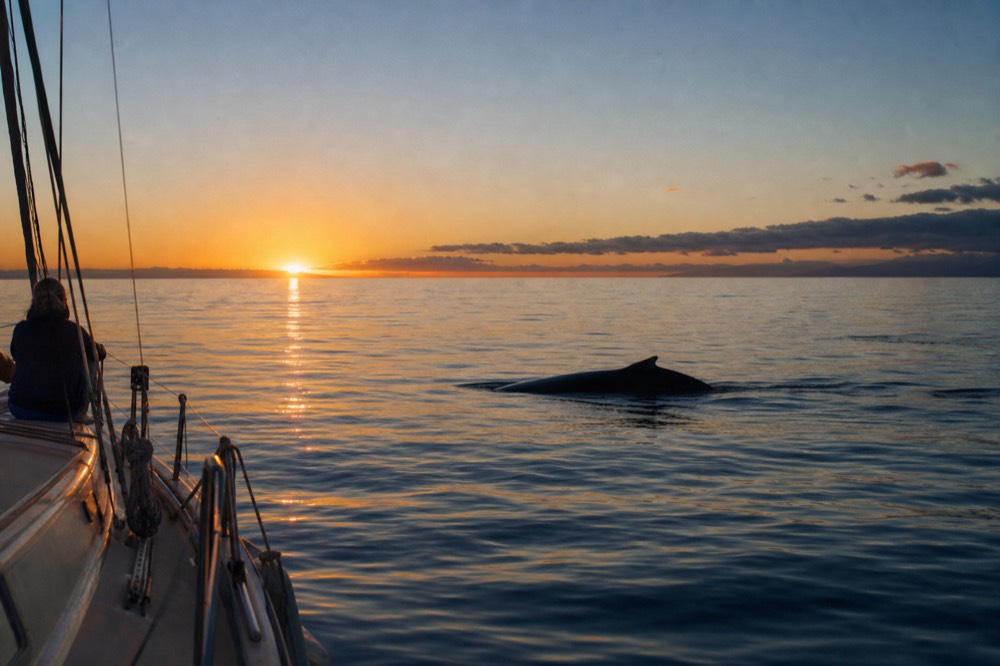
Substantially. Humpbacks are in Hawaiian waters from November through May, peaking January to March, and they surface during the same golden hour the boats are out in. Sunset itself never leaves a window of 5:44pm to 7:12pm, because Hawaii keeps one clock all year. No boat can promise a whale, and federal rules keep every vessel 100 yards off.
Winter is the season people underestimate. A February sail leaves in daylight, returns in the dark and may well put a breaching adult humpback between your boat and the sun. NOAA's guidance for boaters in the sanctuary sets that 100-yard approach rule everywhere in Hawaiian waters, so what you get is distance and patience rather than a close encounter. Crews cut the engine and wait.
Summer trades the whales for length of evening and the northern sun track. Lahaina Harbor, meanwhile, is working its way back: commercial boat operations resumed there in December 2025 after the 2023 wildfire, with dredging continuing through 2026, so departures from that harbor are fewer than from Kaanapali or Maalaea.
Is a boat actually worth it when the beach is free?
For the light, yes, and the price of entry is low. The cheapest true sail in the fleet runs $71 for two hours and holds the island's highest rating at 4.9. What you buy is the angle: eye level with the water, out from under the palms, with the mountains behind you and nobody's beach chair in the shot.
Reviewers keep landing on the same point about value rather than luxury. Euan, sailing out of Maalaea in August 2026, put it plainly: "The food & drinks were a great value for money and the Maui sunset was breathtaking. This is the best 75 bucks you'll ever spend." That sailing is the cheapest genuine sail here, and it outranks boats costing four times as much.
The choice is really between three kinds of evening. A cheap sail for the light alone, a cocktail sail for an open bar and a deck to stand on, or a plated dinner if the meal is the occasion. You can check which evenings are open on the Maalaea sail, or see the current fare for the Day's End luxury sail if a 65-foot catamaran with an open bar suits the night better. Every boat on the island sits side by side in the full fleet comparison, and if you are still weighing one island against another, we set Maui beside the rest in how Maui compares with the other islands.