Will I Get Seasick on a Sunset Sail in Maui?
Evening sails here run two hours inside a four-island lee, not open ocean. Where the water turns bumpy, which hull moves least, and when a remedy works.
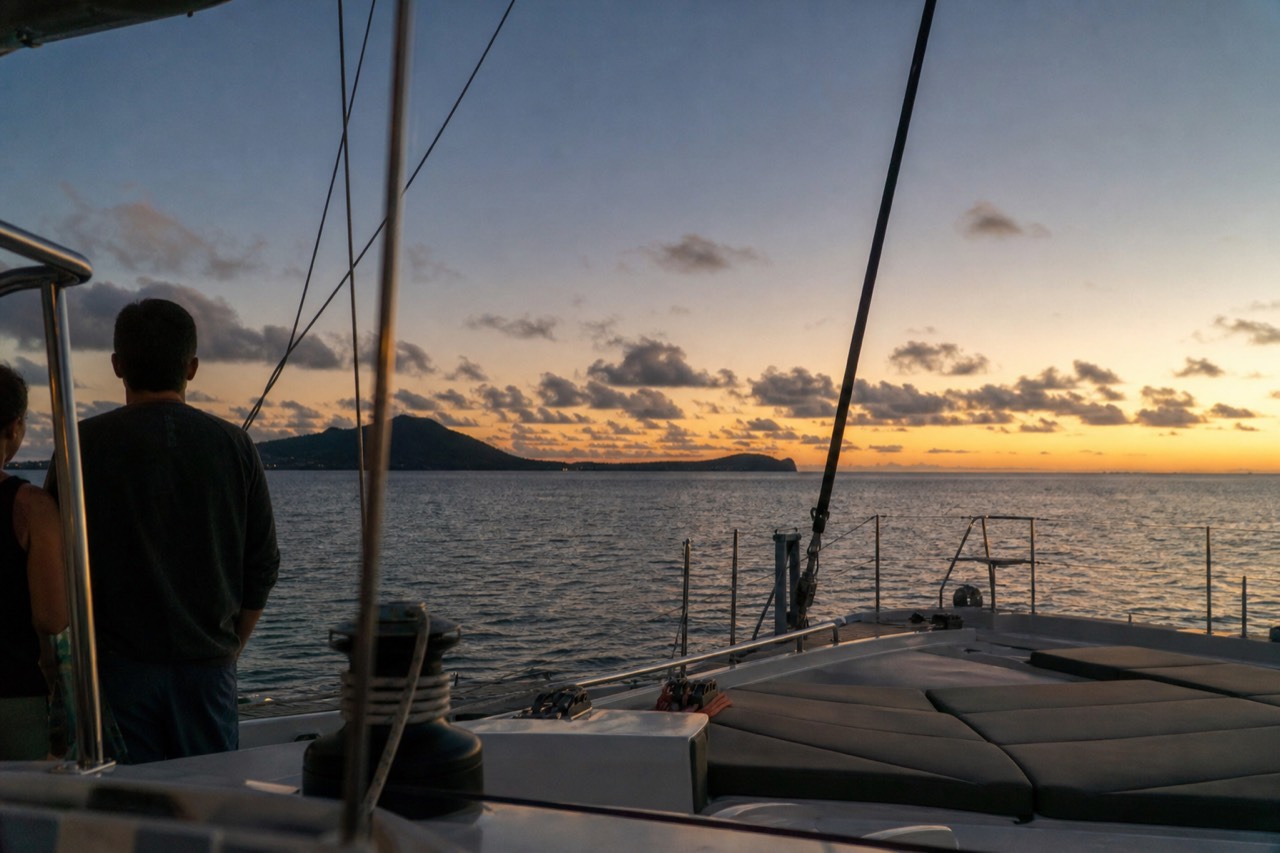
The water between Maui and Lanai sits in a pocket. Four islands ring it: Maui behind you, Lanai ahead, Molokai off to the north and Kahoolawe to the south. Swell that has been building across thousands of miles of open Pacific mostly cannot get in. That pocket is the Auau Channel, and it is where nearly every evening boat on this island spends its two hours.
How rough does the water actually get?
Usually mild. The Auau Channel is shielded on four sides, and marine forecasts for Maalaea Bay routinely put seas at two feet or less overnight with north winds to 20 knots. Compare that with the open Hawaiian waters just outside, where 4 to 5 foot seas are the everyday number.
Trade winds blow northeast at 10 to 20 knots or more for much of the year, and they matter less than the sea state does. Wind you can dress for. What moves a stomach is a boat repeating the same motion for a long time, and a two-foot sea inside a sheltered channel does not produce much of one.
The honest caveat sits at Maalaea. Those trades funnel across the low isthmus between the two volcanoes and pile up in the bay, which makes Maalaea Small Boat Harbor one of the windiest in the state on an afternoon. The first fifteen or twenty minutes after leaving the breakwater can be genuinely bumpy and you will get splashed. Then the boat rounds toward the lee, the wind usually eases as the sun drops, and the ride flattens out. Anyone who has read when the boats call a sailing off already knows the flip side: operators cancel when the channel is unsafe, so the sailings that go ahead are the ones the captain judged fine. The NWS marine forecast for Hawaiian coastal waters is public if you want to look at your date yourself.
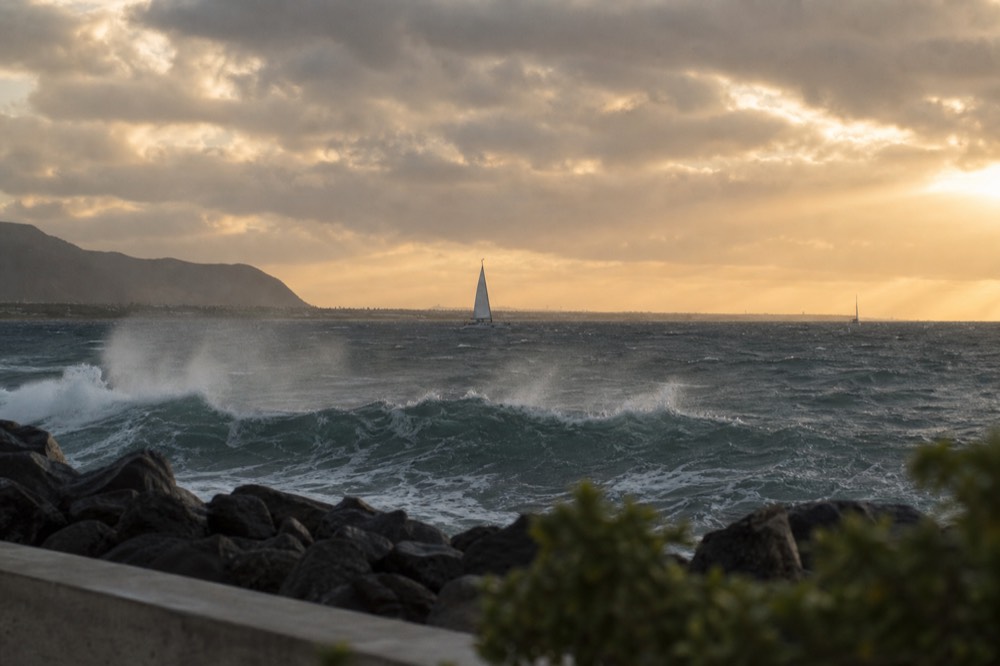
Which boats move the least?
Size and hull shape decide it. The Maalaea dinner boats are the most stable platforms on the island: Pride of Maui carries the biggest deck space of any evening vessel here, and the double-deck Quicksilver is close behind. Sailing catamarans are steady too, but they heel, which is a different sensation entirely.
A wide catamaran resists roll because it is effectively two hulls holding the deck apart, which is why almost the whole evening fleet uses the design. Within that, a large motor catamaran running level is the least eventful ride available, and a sailing catamaran under canvas leans into the wind and stays leaning. Neither is dangerous. People who say they dislike boats usually mean they dislike the lean.
| Boat | What it is | Where to sit | Who it suits |
|---|---|---|---|
| Pride of Maui | Biggest deck space in the Maalaea fleet, 2h buffet dinner with live hula, $168 | Aft, on a bench near the stern | Anyone genuinely nervous about motion |
| Quicksilver | Double-deck dinner boat, three courses and two drinks, $140 | Lower deck, toward the stern | Steadiest ride at the lowest dinner fare |
| Calypso | Triple-deck, carved prime rib or island fish, $150 | Lower deck, mid-ship | Groups who want room to move around |
| Alii Nui Day's End | 65-ft luxury sailing catamaran, appetizers and open bar, $159 | Aft cockpit, out of the spray | People who want the sail without the crowd |
| Sea Maui and Teralani, Kaanapali | Sailing catamarans loaded off the beach | Aft bench, never the forward trampoline | Sailors who actively want the heel |
| Six-guest powerboat | Small, fast, private-feel hull | Anywhere, but it reacts to every chop | Small groups happy in a lively boat |
Note what happens at the bottom of that table. A small boat is a worse choice for a delicate stomach than a big one, which is the opposite of what people assume when they pay more. The Maalaea evening fleet is where the large hulls live, and if the largest deck is what you want you can see which evenings the Hula dinner still has space.
Where should you sit if you are worried?
Aft, low and near the centreline. Motion is smallest close to the boat's pivot point and largest at the ends, so the forward trampoline on a sailing catamaran is the worst seat available for this and the stern bench is the best. Stay outside, keep the horizon in view, and skip the enclosed cabin.
The trampoline is the netting stretched between the bows, and it is the most fun place on a sailing catamaran and the least advisable one if you are prone to motion sickness. It rises and falls through the full range of whatever the boat is doing, and it is where the spray lands. Save it for the ride back, once you know how you feel.
Fresh air does more than anything else. Reading, scrolling a phone or standing in the head with no view is what turns a mild wobble into a real problem, because your inner ear and your eyes stop agreeing. Watching Lanai sit still on the horizon keeps them in agreement. Our walkthrough of how an evening sailing runs from check-in to dock covers the boarding sequence if you want to plan where you will end up sitting before you get there.
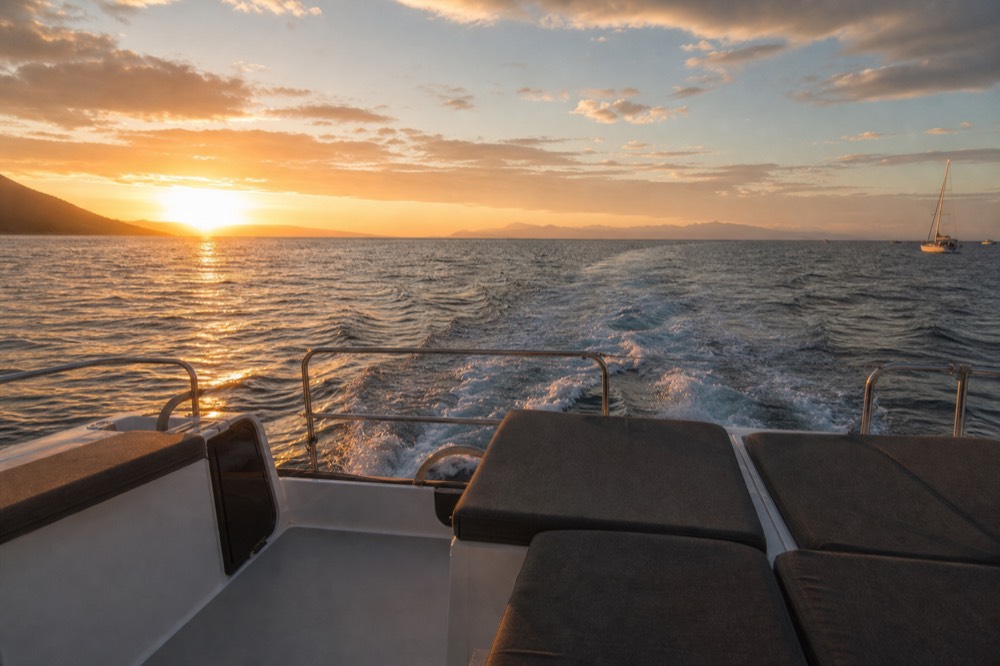
Do the remedies work, and when do you take them?
Only if you take them before you board. Every common motion-sickness tablet is meant to be swallowed ahead of travel, not after the horizon starts moving, and by the time you feel unwell on a two-hour sailing there is not much runway left for one to help.
Travellers say the same thing in reviews, repeatedly and without being asked. Gary, writing after an August 2026 Maalaea dinner sailing, ended a happy review with a warning: "If you get sick in boats or haven't take a boat before, take Dramamine before the trip."
Ginger chews, acupressure bands and eating something light beforehand all have their defenders, and none cost anything to try. Boarding opens 30 to 45 minutes before departure, so there is time at the harbour to sort yourself out. Crews deal with this every night and are not remotely surprised by the question. If dinner service is the part that worries you, check what the Quicksilver is charging on your date, since its three courses arrive at your seat rather than requiring you to carry a plate across a moving deck.
What if it hits you anyway?
You are two hours from the dock at worst, and usually much less. Get to the stern rail, stay outside, look at land, and stop reading anything. Crews carry supplies for exactly this and will move you to a better seat without making a production of it.
The shape of these trips helps. The boat leaves in daylight, sits more or less stationary while the sun goes down, then comes back with the wind behind it. That still stretch in the middle is when people relax.
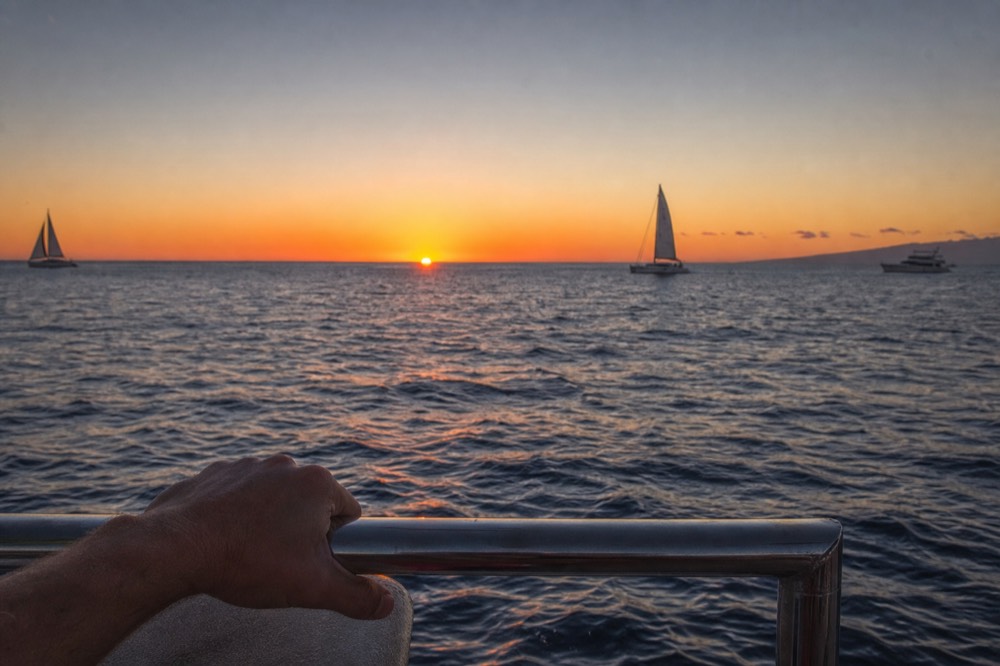
Is a beach departure gentler than a harbour one?
Different, not gentler. The Kaanapali boats load off the sand, so you wade out and there is no windy breakwater to clear, which removes the bumpiest twenty minutes of a Maalaea evening. In exchange you are boarding a sailing catamaran that will heel once the canvas is up.
If the Maalaea wind is the specific thing putting you off, the Kaanapali beach departures sidestep it. Sea Maui's cocktail sail is the most-reviewed boat on the island at 4.8 across 1,533 reviews, and the wet-feet loading that some people dread turns out to be the part reviewers describe as fun. It also means shoes come off and stay off, which is worth knowing before you dress.
Pick by what actually bothers you. Nervous about motion, book a big Maalaea dinner deck. Nervous about wind and spray, take a beach departure. Free cancellation applies across the fleet with a typical 24-hour cutoff, so a forecast that turns ugly does not have to cost you anything.