What to Bring on a Sunset Cruise in Maui
Bring less than you think, plus one warm layer. The wind off the Maalaea isthmus and the temperature drop after sundown catch out most first-timers.
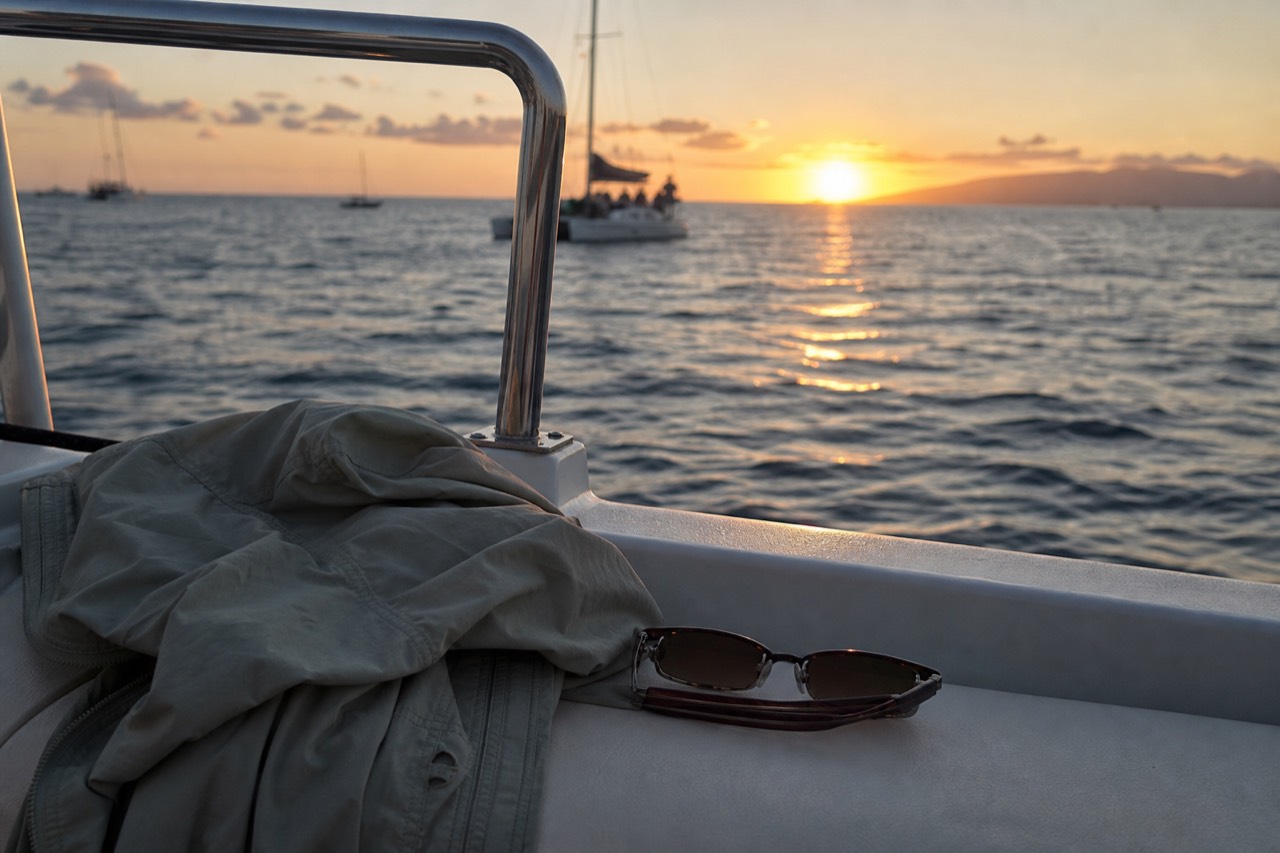
The sun drops behind Lanai and the deck changes temperature within minutes. The glare problem is gone, the sunscreen has done its job, and what is left is moving air at ten to twenty knots over skin that is still damp from the boarding. The person in a sundress who brought nothing else is the one asking a crew member for a towel.
What do most people wish they had brought?
A warm layer. Air temperature barely moves in Hawaii, but apparent temperature does: a boat under way in a 15-knot trade wind after sundown feels a long way from the beach you left. A light jacket, a wrap or a hoodie is the single item reviewers mention missing.
Maalaea makes this sharper than anywhere else. Trade winds funnel across the low isthmus between the two volcanoes and gather in the bay, which makes it one of the windiest harbours in the state on an afternoon. It usually eases toward sunset. It does not always ease enough, and reviewers of the Maalaea dinner boats warn about the wind more often than about anything else on board, right down to holding on to your belongings.
Kaanapali is gentler, and you still want the layer for the ride back. The full dress-code question, including what people actually wear to a plated dinner on a moving deck, is worked through in our guide to what to wear on an evening sailing.
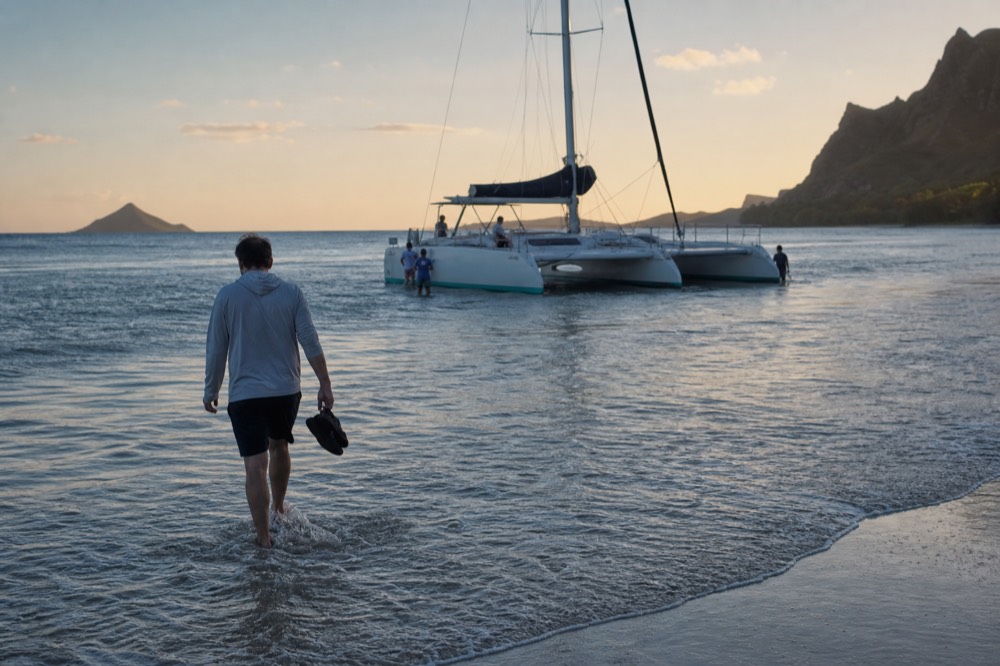
What belongs in your hands at the dock?
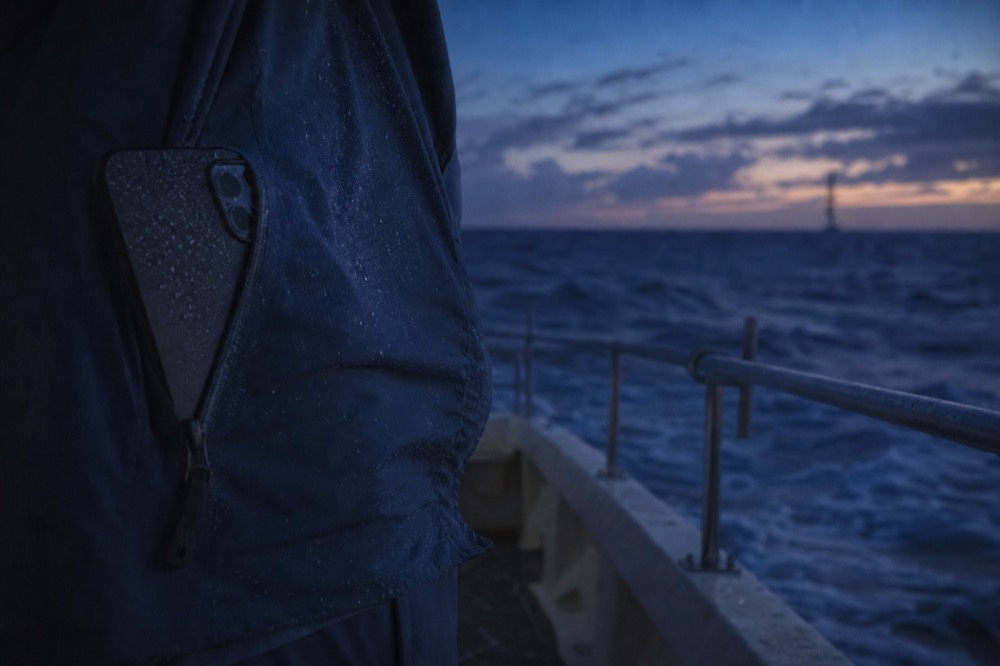
Six things: a layer, flat shoes you can carry, sunglasses for the first hour, reef-safe sunscreen applied before you arrive, a phone secured in a zip pocket or on a strap, and a photo ID. Crews check ID at the bar because the drinking age is 21 and it is enforced on the water.
Karen, reviewing a Kaanapali dinner sail in May 2026, was blunter than any packing guide: "No need for towels or a bag just take a camera." She is right about the towels. Every boat has what it needs, the boarding is short, and a large bag is a nuisance on a deck where people move around.
The shoes deserve their own note. Kaanapali departures load off the sand, so you wade to the boat with your shoes in your hand and they stay off for the sailing. That includes the dinner sail, which serves a full meal to people who boarded barefoot, and you can check the current fare and departure time for it before deciding what to wear. Maalaea and Lahaina load dry from a slip, so you can wear what you like, as long as it is flat. Heels on a moving deck are a bad idea and several operators will simply ask you to take them off.
Phones go over the side more often than anything else. A zip pocket, a wrist strap or a lanyard costs nothing and solves it. Cameras are welcome everywhere, and reviewers on the Kaanapali boats keep noting that the crew take photos of guests unprompted.
What should you leave in the car?
Umbrellas, hard coolers, outside alcohol, heels and drones. Operators pour their own bar and will not let you bring your own, hard coolers do not fit the deck plan, and drones are effectively unusable: the federal 100-yard rule around humpback whales applies to drones as well as vessels.
That whale rule is the one that surprises people. It prohibits approaching within 100 yards of a humpback by vessel, swimmer, kayak or drone, everywhere in Hawaiian waters, and NOAA's guidance for boaters sets out how captains handle it. Between November and May, when whales are around, a drone launched from a boat is a problem for the operator, not just for you. Most crews will refuse before you get it out of the bag.
Umbrellas fail for a duller reason: wind. A passing shower on these sailings lasts a few minutes and everyone gets slightly wet, which is why a jacket with a hood beats anything you have to hold.
Does the list change by boat and by season?
Yes, mostly at the edges. Beach loading changes your footwear, Maalaea changes how serious your jacket needs to be, and the season changes how much of the sailing happens in the dark. In late November the sun is down by 5:44 p.m., so a winter boat spends most of its return leg after dusk.
| Departure or season | What changes | What to add |
|---|---|---|
| Kaanapali beach loading | You wade out; shoes come off and stay off | Flat shoes carried in hand, nothing that cannot get splashed |
| Maalaea harbour slips | Dry boarding, but the windiest harbour on the island | A real jacket rather than a shawl |
| Lahaina Harbor slips | Dry boarding, calmer afternoon air than Maalaea | One light layer, plus the Prison Street check-in address |
| Summer, sunset 6:56 to 7:11 p.m. | Long light, warm air, later return to the dock | Sunglasses matter more than the jacket does |
| Winter, sunset 5:44 to 6:25 p.m. | Most of the return leg runs in the dark | Two layers, and closed shoes if you feel the cold |
| Whale season, November to May | Long spells standing at the rail | A warmer layer and small binoculars if you own them |
Boarding opens 30 to 45 minutes before departure across the fleet, so whatever you forget, you have a window at the harbour to fix it. The sequence from check-in to the first drink is set out in our walkthrough of how an evening sailing actually runs, and it is worth reading if this is your first boat.
If you want the layer question settled by the boat rather than by you, the Kaanapali beach departures are the warmest of the three loading points, and the cocktail sails there run two hours rather than two and a half. You can compare the Teralani cocktail fare with the dinner sailings if a shorter, lighter evening suits you better.
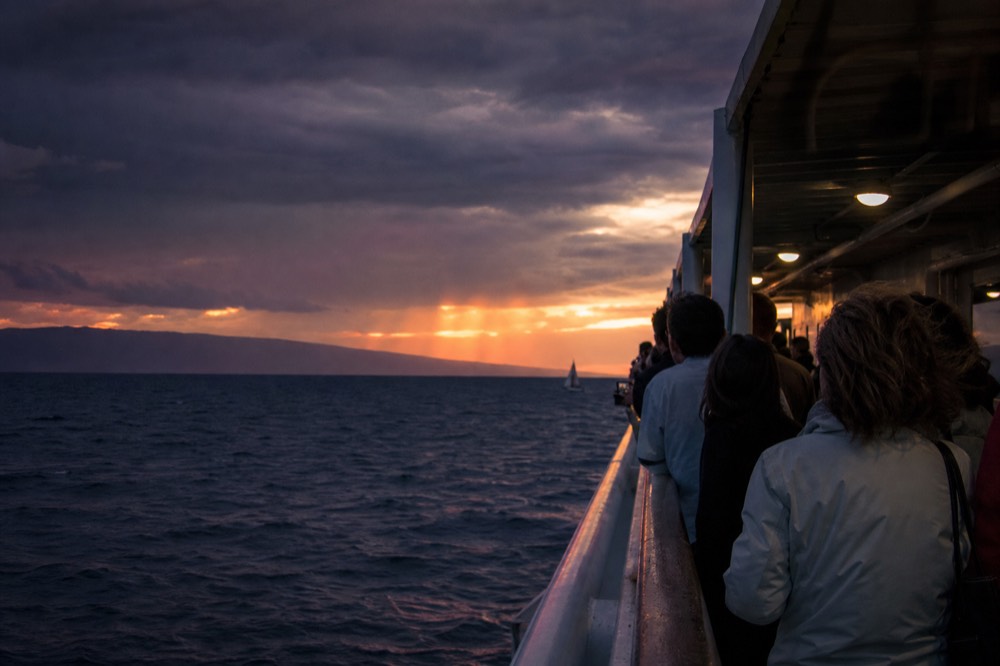
Do you need cash, and how much?
Bring some. Tips are the one thing a card at the kiosk does not cover, and crews on these boats work hard for two hours in the wind. Small bills are also useful for the on-board photographer on the Maalaea dinner boats, whose prints are sold separately from the ticket.
Nothing else needs cash. Fares are paid when you book, bars are settled by card on most boats, and parking at Maalaea and at Whalers Village is straightforward. The tipping question comes up constantly and has its own answer in our piece on what to tip the crew.
Pack for the boat you booked, then stop. Two hours, one layer, flat shoes and a camera covers almost every evening on this island, and the thing worth carrying more than any gadget is enough time to board without running.